


Secure software development training helps teams build, test, and maintain applications with security in mind from the start. It gives developers and architects practical ways to spot risks, make safer design choices, and check their work before release. The training goes beyond writing code.
It can cover threat modeling, secure system design, vulnerability testing, and risk management. The OWASP Top 10 is also a useful guide to common application security risks. These skills matter throughout a project, not just during the final review. The goal is steady, practical improvement. Keep reading to see how teams can put them into practice.
Secure Development Quick Wins
Building secure software takes more than fixing bugs before release. Developers need practical security skills at every stage, from planning and design to coding and testing.
- Spot risks early: Secure software development training helps teams identify security risks during planning, design, coding, and testing.
- Build safer code: Developers need practical skills in input validation, authentication, access control, data protection, and threat analysis.
- Make security part of daily work: Role based exercises and security checks throughout the software development lifecycle help teams find and fix defects earlier.
Why Is Secure Software Development Training Important?
A piece of software can have a serious security flaw even when most of its code works as expected. Sometimes, the problem comes from one small decision. A developer trusts data sent by a browser. An API lets users access records without checking ownership. A server keeps an old service running even though nobody uses it.
Each case can leave a door open.
Secure software development training helps developers spot these risks while they work. It also gives architects and testers a better idea of what to look for during each stage of the software development lifecycle (SDLC).
The OWASP Top 10 lists common web application risks, such as broken access control, security misconfiguration, and injection. OWASP also recommends application security training as part of a wider security program.
What Happens When Security Is Added Too Late?
Finding a security flaw just before release can cause a lot of extra work. The problem may affect several features, so developers have to review more than one part of the application.
Take an online banking API as an example. A user signs in and requests an account record by entering an ID. If the server checks only whether the person is logged in, someone might change that ID and try to view another customer’s information.
The team then has to fix the access rules, check other API requests, and test the affected features again. That takes time. It can also delay the release.
A security review earlier in development gives the team more room to fix the problem. It is much easier to change a design before other features depend on it.
What Principles Should Developers Learn in Secure Software Development?

Developers need to understand how an application should handle users, data, and unexpected errors. Secure coding training for developers can help teams apply basic security principles across different programming languages.
How Does Defense in Depth Protect Software?
Defense in depth means using several security controls instead of trusting one safeguard to do all the work. If one control fails, another may still limit the damage.
For example, an application should check a user’s identity before allowing access. It must also check what that user can do. Parameterized queries help reduce SQL injection risks, while encryption protects sensitive data.
These controls do different jobs. Encryption cannot stop a user from opening another customer’s account if the application has poor access rules. That is why teams need more than one layer of protection.
Why Is Least Privilege Essential for Application Security?
Least privilege means giving users and services only the access they need. A reporting service may need to read certain database records. It has no reason to change passwords or delete database tables.
Developers can manage permissions through Role Based Access Control (RBAC) or Attribute Based Access Control (ABAC). RBAC gives users access based on their roles. ABAC checks other details, such as the user’s identity, the resource, and the conditions of the request.
There is one detail developers should never overlook. The server must check permissions for every protected request. Hiding a button on a webpage does not stop someone from sending a direct API request.
What Technical Skills Does Secure Software Development Training Cover?

Security training should include coding skills that developers can use in their daily work. Secure coding training programs can help developers build these skills through practical exercises. Common references include the OWASP Top 10, OWASP API Security Top 10, and CWE Top 25.
The lessons will depend on the type of software being built. A frontend developer may spend more time on browser security. A backend developer may need more practice with databases and API access rules.
How Can Developers Prevent Injection Attacks and Cross Site Scripting?
Injection happens when an application treats user input as part of a command. SQL injection is one example. Cross site scripting (XSS) is different. It happens when unsafe content causes a browser to run a script that an attacker has supplied.
Developers can lower these risks with a few practical methods:
- Allowlist validation: Accept data only when it follows the expected format, length, and type.
- Parameterized queries: Keep SQL commands separate from values submitted by users.
- Prepared statements: Use database features that separate query instructions from data.
- Output encoding: Treat user content as text based on where it appears, such as HTML or a URL.
- Content Security Policy (CSP): Set rules for which scripts and other resources a browser can load.
Think about a website search box. The search term should be sent to the database as a value. It should not be inserted directly into an SQL command.
Validation and output encoding also have separate roles. Validation checks whether the submitted data follows the rules. Encoding helps stop displayed content from being treated as executable code.
How Does Threat Modeling Help Prevent Security Vulnerabilities?
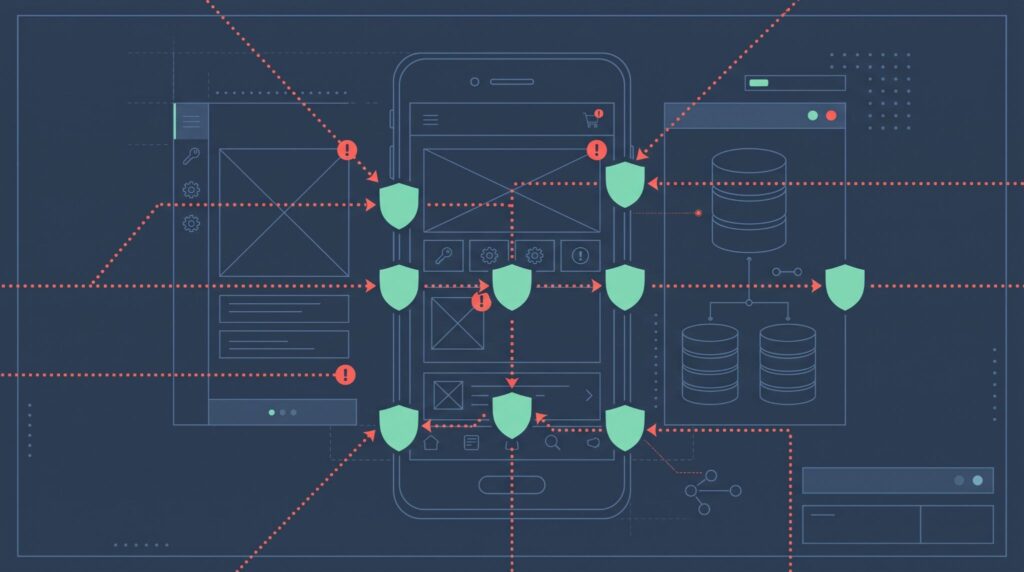
Before building a feature, developers should consider how someone might misuse it. This is the basic idea behind threat modeling.
The team looks at how data moves through the application, which systems it connects to, and where access needs to be checked. It can then list possible attacks and decide which controls are needed.
How Is Security Integrated Into the Software Development Lifecycle?
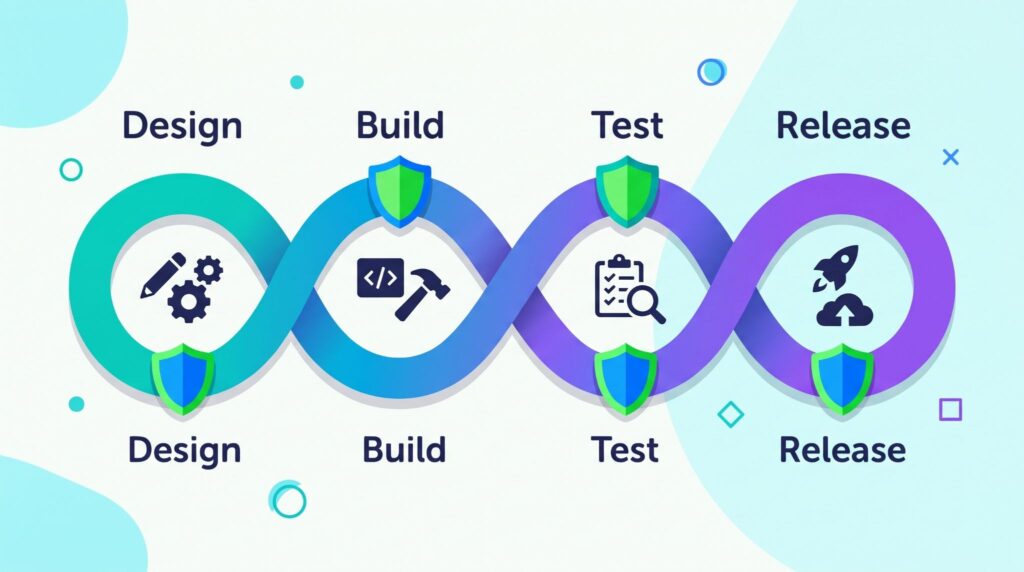
Security checks should happen throughout development, not only before launch. Secure code development training can help teams apply secure SDLC practices during planning, design, coding, testing, and deployment.
DevSecOps follows the same idea by adding security tasks to development workflows and CI/CD pipelines. This gives teams more chances to find problems while they are still working on the application.
Which Security Tools Should Developers Learn?
Developers should know what each tool checks and how to deal with its findings. Different tools look for different weaknesses.
| Security tool | Purpose | SDLC stage |
| IDE linters and secret scanners | Find unsafe code patterns and exposed credentials | Development |
| SAST | Check source code for possible vulnerabilities | Code review |
| SCA | Find vulnerable third party packages and license risks | Build |
| DAST and IAST | Test an application for weaknesses while it runs | Testing |
| Container and IaC scanning | Find unsafe container images and infrastructure settings | Deployment |
These tools can save time, but their results still need a person to review them. A scan may flag code that is not a real threat. Developers need to check the finding, understand the risk, and fix the cause when a problem exists.
What Does Shift Left Security Look Like in Practice?
Shift left security means looking for security problems earlier in development. Instead of waiting for the final test, teams check risks while they plan and build a feature.
“Following these practices should help software producers reduce the number of vulnerabilities in released software.” – National Institute of Standards and Technology (NIST), Secure Software Development Framework (SP 800-218)
For example, developers can review third party packages before adding them to a project. They can test API permissions before release and scan container images before deployment.
The NIST Secure Software Development Framework (SSDF) supports this approach. It groups security practices into four areas: preparing the organization, protecting software, producing secure software, and responding to vulnerabilities.
What Makes Secure Software Development Training Effective?
Source: Computerphile
A course should give developers time to practice. Reading about security risks is useful, but it does not show whether someone can spot a flaw in real code.
“We find that while some developers experience excellent secure-coding training, others receive inadequate training, and the majority receive none.” – Ryan, Roedig, and Stol, IEEE/ACM (2024)
Training also needs to match the tools and systems the team uses. A developer working on a mobile app may face different risks from someone building a cloud service.
Why Are Hands On Vulnerability Labs Important?
Hands on labs give developers a safe place to work with vulnerable applications. They can try an attack, find the weakness, change the code, and test the fix.
For example, a lab might ask developers to find an SQL injection flaw in a sample login page. They then replace the unsafe query with a parameterized one and check whether the attack still works.
Other useful exercises include threat modeling workshops and security focused code reviews. The aim is to help developers understand why a weakness exists, not only learn its name.
FAQs
How Can Developers Apply Security Skills Under Tight Deadlines?
Developers can add security checks to tasks they already perform. They can use a secure coding checklist when writing code, review changes that affect sensitive data, and run automated tests before release. Secure development training should also teach teams how to rank vulnerabilities by severity. This helps developers address serious risks without delaying routine development work.
How Often Should Development Teams Repeat Security Training?
A single secure software development course may not prepare developers for every risk they will face. New frameworks, software dependencies, and attack methods can change how applications need protection. Teams should review their security knowledge regularly and arrange refresher sessions when their technology changes. Ongoing developer security awareness also helps employees apply secure coding practices consistently.
How Can Teams Measure the Results of Security Training?
Teams can measure training results by comparing security findings before and after each program. They should track recurring coding errors, unresolved vulnerabilities, code review findings, and the time needed to fix security issues. Application security training should improve how developers handle these problems. Fewer repeated errors and faster remediation can show whether employees apply their new skills.
What Should Teams Do When Developers Use Different Programming Languages?
Teams should establish shared security standards while addressing risks linked to each programming language. Secure programming training can cover input validation, access control, error handling, and safe data processing. Developers should also practice with examples that match their languages, frameworks, and project requirements. This approach helps teams maintain consistent security standards across different development environments.
How Can Security Teams Work With Developers Without Slowing Projects?
Security teams should involve developers early, explain vulnerabilities clearly, and recommend practical fixes. Threat modeling training can help both groups identify risks before development begins. Teams should also agree on security requirements, review code regularly, and prioritize issues based on their potential impact. Clear communication helps developers address security concerns without creating unnecessary delays.
Build Safer Code With Practical Training
The Secure Coding Practices Bootcamp helps developers build safer coding habits through hands-on, real-world exercises. This two-day program covers the OWASP Top 10, input validation, secure authentication, encryption, and safe dependency use. Participants also receive practical labs, session replays, cheatsheets, and a completion certificate.
The bootcamp is available online and in person, with custom corporate training and volume discounts for teams. Join the Secure Coding Practices Bootcamp to strengthen your development skills and apply better security practices to your everyday work.
References
- https://ieeexplore.ieee.org/document/10649741
- https://csrc.nist.gov/pubs/sp/800/218/final