Skip to content
No results
  • Home
  • About Us
  • Blog
  • Bootcamp
  • Contact Us
Secure Coding Practices
  • Home
  • About Us
  • Blog
  • Bootcamp
  • Contact Us
Secure Coding Practices
  • Common Vulnerabilities & Attacks, Analyzing Broken Authentication Flaws

Insecure Password Storage Risks Examples: How Breaches Happen

A hacker exploiting insecure password storage risks examples shown across breached server credentials and network vulnerabilities.

Poor password storage directly exposes user accounts to theft and fraud. When passwords are stored in plaintext, with weak hashes, unsalted hashes, or reversible encryption, a single breach can compromise millions of users.  Attackers focus on databases, not individual passwords,…

  • Leon I. Hicks
  • June 8, 2026
  • Analyzing Broken Authentication Flaws, Common Vulnerabilities & Attacks

Common Broken Authentication Vulnerabilities Explained

A diagram mapping Common Broken Authentication Vulnerabilities including weak passwords, session hijacking, and MFA 

Common broken authentication vulnerabilities continue to expose apps to account takeover, weak sessions, and credential abuse. Broken authentication lets hackers take over accounts. They do this by exploiting weak logins, bad session handling, or flawed password reset systems. It’s a…

  • Leon I. Hicks
  • June 5, 2026
  • Analyzing Broken Authentication Flaws, Common Vulnerabilities & Attacks

Analyzing Broken Authentication Flaws: Risks, Examples, and Prevention

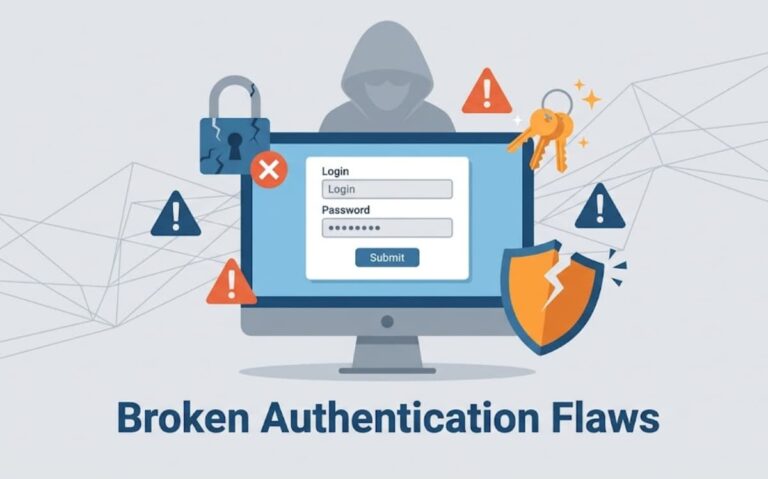
Analyzing Broken Authentication Flaws shown via hacker silhouette behind a login form with broken locks and warning icons

Broken authentication allows attackers to hijack user accounts by stealing passwords, session tokens, or API keys. Even though it sits on the OWASP Top 10 list, we constantly see these exact flaws during our bootcamp code reviews. At Secure Coding…

  • Leon I. Hicks
  • June 4, 2026
  • Cross-Site Scripting (XSS) Explained

Sanitizing User Input Avoid XSS in Modern Apps

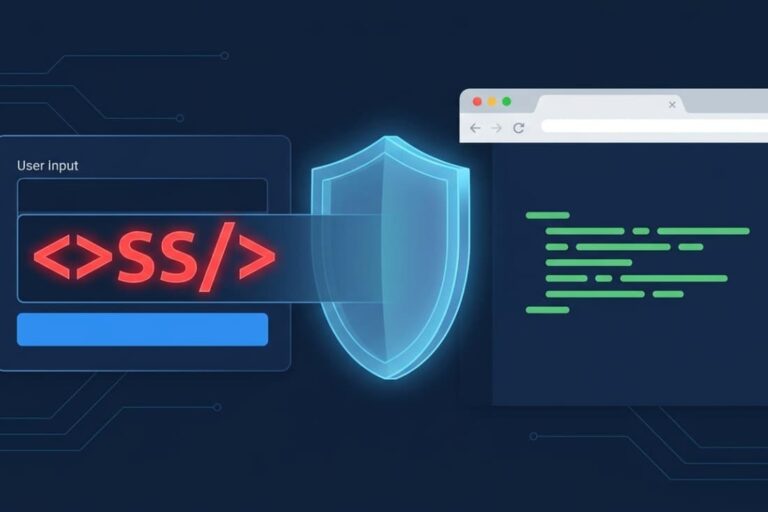
Security shield blocking malicious script from a user input field, illustrating sanitizing user input avoid XSS attacks.

Sanitizing user input helps, but stopping XSS correctly requires context-aware output encoding and safe rendering. Filtering data on entry isn’t a complete fix. The browser’s interpretation when it displays the data decides safety.  We’ve seen apps sanitize data, only to…

  • Leon I. Hicks
  • June 3, 2026
  • Cross-Site Scripting (XSS) Explained

Real World XSS Attack Impact on Modern Websites

Malicious script breaching a webpage security wall, depicting the real world XSS attack impact on web applications.

Real-world XSS attacks lead to account takeover, session hijacking, phishing, and data theft. They break the trust between a user and an application. When an attacker injects a script into a trusted site, the browser runs it with the victim’s…

  • Leon I. Hicks
  • June 2, 2026
  • Cross-Site Scripting (XSS) Explained

Output Encoding Prevent XSS Correctly Guide

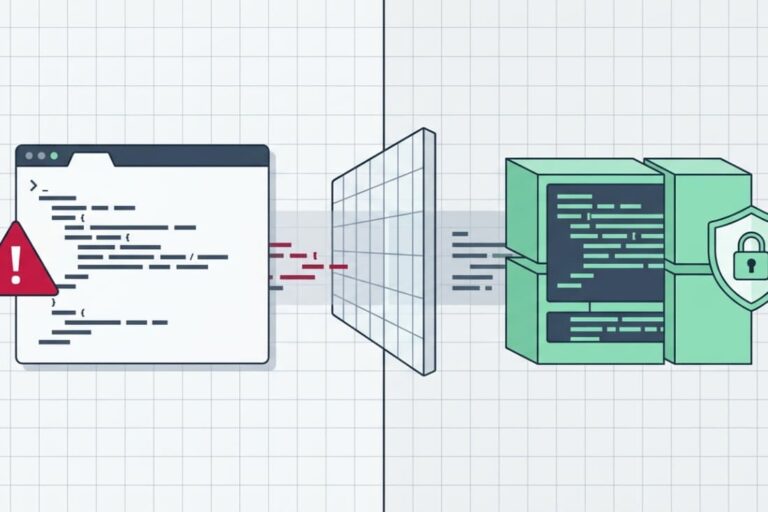
Diagram of malicious code filtered through a security layer, showing output encoding prevent XSS correctly in practice.

Output encoding stops XSS by forcing browsers to treat user input as plain text, not code. It neutralizes malicious scripts before they execute. When your app displays user data, like a comment, that data must be transformed.  Encoding changes special…

  • Leon I. Hicks
  • June 1, 2026
  • Cross-Site Scripting (XSS) Explained

Content Security Policy Prevent XSS: Your Browser’s Built-In Security Guard

Shield blocking malicious script injections, illustrating how content security policy prevent XSS attacks on secure websites.

Content Security Policy Prevent XSS by restricting script execution in the browser. A strict CSP helps stop modern XSS attacks and improves web application security through safe configuration. Content Security Policy Prevents XSS by controlling which scripts a browser is…

  • Leon I. Hicks
  • May 31, 2026
  • Cross-Site Scripting (XSS) Explained

XSS Mitigation Techniques for Developers That Still Matter in 2026

AI robot scanning a cybersec portal dashboard, demonstrating XSS mitigation techniques developers apply to block script injections and SQLi.

Learn XSS mitigation techniques for developers that help prevent scripting attacks in modern web applications. Discover encoding, CSP, sanitization, secure coding practices, and browser security controls. XSS mitigation techniques for developers remain essential in 2026 because cross-site scripting continues to…

  • Leon I. Hicks
  • May 30, 2026
  • Cross-Site Scripting (XSS) Explained

Testing for XSS Examples Tools in Modern Web Apps 

Backend monitoring concept demonstrating testing for XSS examples tools and delayed XSS alerts. 

Explore testing for XSS examples tools, from reflected and DOM XSS to blind XSS detection in today’s applications.  Cross-Site Scripting, or XSS, is an attack where someone slips a malicious script into a website. It works because the site takes…

  • Leon I. Hicks
  • May 29, 2026
  • Cross-Site Scripting (XSS) Explained

How to Prevent XSS Vulnerabilities in Web Applications: A Complete Defense Guide

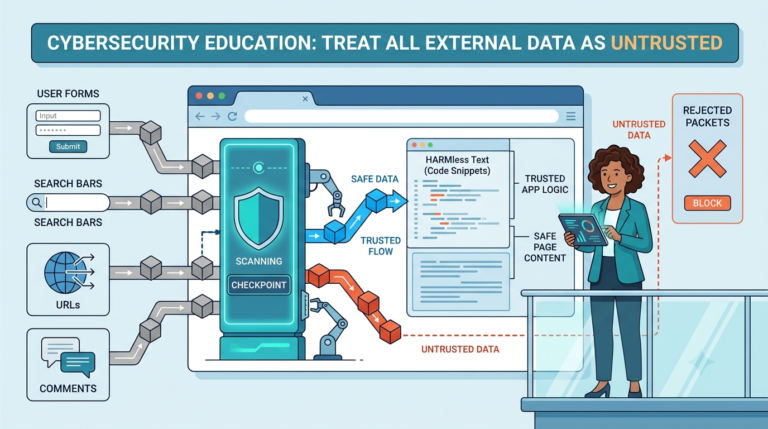
Security checkpoint diagram demonstrating how to prevent XSS vulnerabilities in web application by treating all external data as untrusted. 

How to prevent XSS vulnerabilities in web applications using output encoding, Content Security Policy, input validation, and sanitization. Learn the layered defenses that stop malicious scripts. How to prevent XSS vulnerabilities in web applications is a question every development team…

  • Leon I. Hicks
  • May 28, 2026
Prev
1 … 15 16 17 18 19 20 21 … 60
Next
Secure Coding Practices

Join a thriving global community of developers dedicated to writing cleaner, safer, and more resilient code. Whether you're just starting out or leveling up your skills, this bootcamp gives you the practical knowledge and hands-on experience needed to identify vulnerabilities, apply secure coding principles, and build software that stands up to real-world threats.

Join the Next Bootcamp →

  • About us
  • Blog
  • Bootcamp
  • Disclaimer
  • Contact us
  • Privacy Policy
  • Terms & Conditions

Copyright © 2026 SecureCodingPractices.com — All rights reserved.