Skip to content
No results
  • Home
  • About Us
  • Blog
  • Bootcamp
  • Contact Us
Secure Coding Practices
  • Home
  • About Us
  • Blog
  • Bootcamp
  • Contact Us
Secure Coding Practices
  • Common Vulnerabilities & Attacks

Testing Insecure Deserialization Vulnerabilities: Audit Guide

Testing Insecure Deserialization Vulnerabilities

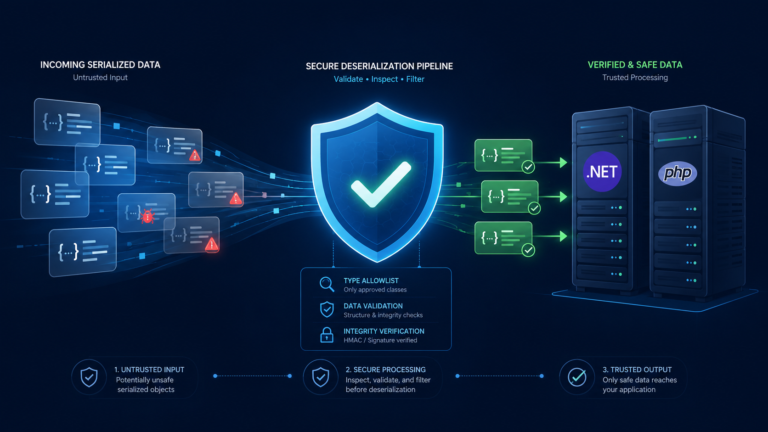
Testing for insecure deserialization is a fundamental responsibility for any security team. At Secure Coding Practices, we emphasize that Testing Insecure Deserialization Vulnerabilities is not just an occasional audit, but a systemic requirement for robust data handling. At Secure Coding…

  • Leon I. Hicks
  • August 3, 2026
  • Dangers of Insecure Deserialization

What Is Remote Code Execution Deserialization Impact?

Warning alert triggers damaged gears, showing remote code execution deserialization impact on apps.

Remote code execution deserialization impact is simple: it’s a skeleton key. This flaw is like an unlocked front door. The security mechanism itself helps the attacker bypass it. Code runs during object reconstruction, often before your authentication logic even starts. …

  • Leon I. Hicks
  • August 2, 2026
  • Dangers of Insecure Deserialization

7 Preventing Insecure Deserialization NET PHP Tips

Shield filtering serialized objects, preventing insecure deserialization net php before server output.

Preventing insecure deserialization NET PHP isn’t about avoiding it. Modern apps have to move complex data. You ensure safety. Treat every byte as hostile. Enforce strict rules. Reject client-controlled data. This is a mindset shift, not just a library.  Our…

  • Leon I. Hicks
  • August 1, 2026
  • insecure deserialization attack examples java, Dangers of Insecure Deserialization

Java Insecure Deserialization: Risks, Attack Scenarios, and Prevention

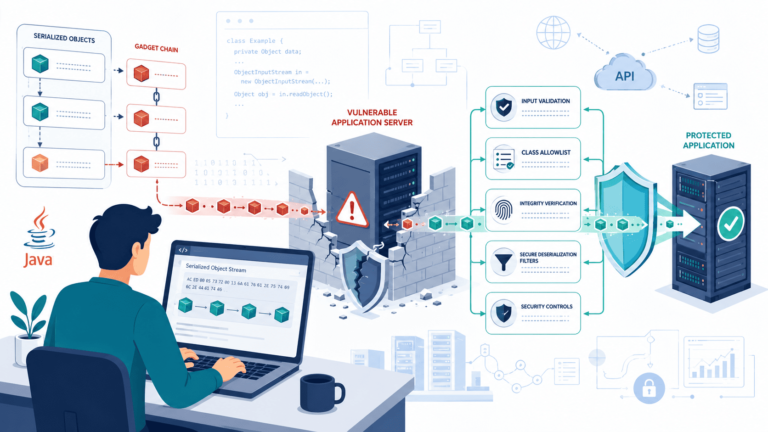
Diagram showing insecure deserialization attack examples java with gadget chains bypassing server defenses

Java insecure deserialization lets attackers turn untrusted serialized data into Java objects without proper validation. That can open the door to remote code execution, privilege abuse, or service disruption if unsafe data reaches the deserialization process. We’ve seen real Java…

  • Leon I. Hicks
  • July 31, 2026
  • what insecure deserialization vulnerability means, Dangers of Insecure Deserialization

What Insecure Deserialization Vulnerability Means

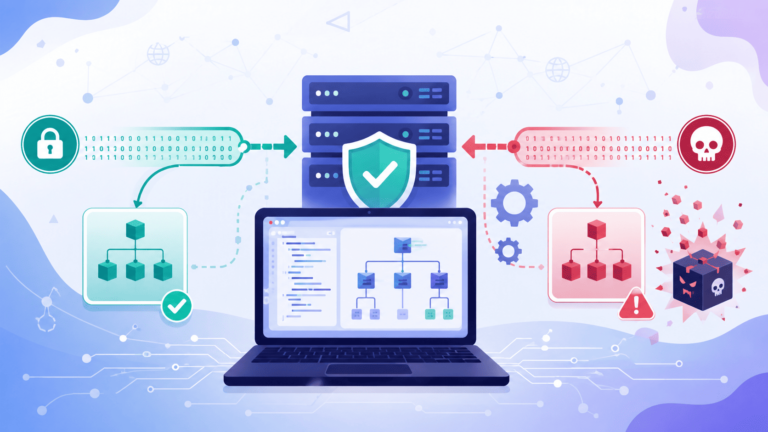
Illustration of what insecure deserialization vulnerability means, showing safe vs malicious data trees hitting a server.

Insecure deserialization lets attackers tamper with serialized data so an application processes it in ways the developer never intended. That can open the door to remote code execution, privilege escalation, or denial-of-service attacks. The risk is serious because the application…

  • Leon I. Hicks
  • July 30, 2026
  • Common Vulnerabilities & Attacks

Dangers of Insecure Deserialization: A Critical Security Risk

Dangers of Insecure Deserialization

The dangers of insecure deserialization represent a significant threat to modern web applications, often allowing attackers to manipulate internal logic or execute arbitrary code. Many developers unknowingly introduce this risk by trusting serialized data objects, failing to realize that these…

  • Leon I. Hicks
  • July 29, 2026
  • Common Security Misconfigurations

Automated Configuration Scanning Tools: Securing Your Infrastructure

Digital visualization of automated configuration scanning tools analyzing server settings.

Automated configuration scanning tools are essential for identifying vulnerabilities in your infrastructure before attackers find them. At Secure Coding Practices, we often see teams struggle with manual audits that miss critical gaps. We teach our bootcamp students that relying on…

  • Leon I. Hicks
  • July 28, 2026
  • Common Security Misconfigurations

Importance Security Hardening Checklist for Teams: 7 Critical Steps

Importance security hardening checklist displayed on a digital tablet.

Importance security hardening checklist practices are fundamental for protecting production systems from unauthorized access. At Secure Coding Practices, we frequently encounter systems that appear secure but are actually riddled with default configurations and open ports. Without a structured checklist, even…

  • Leon I. Hicks
  • July 27, 2026
  • Common Security Misconfigurations

Fix Missing Security Headers Browser Weaknesses

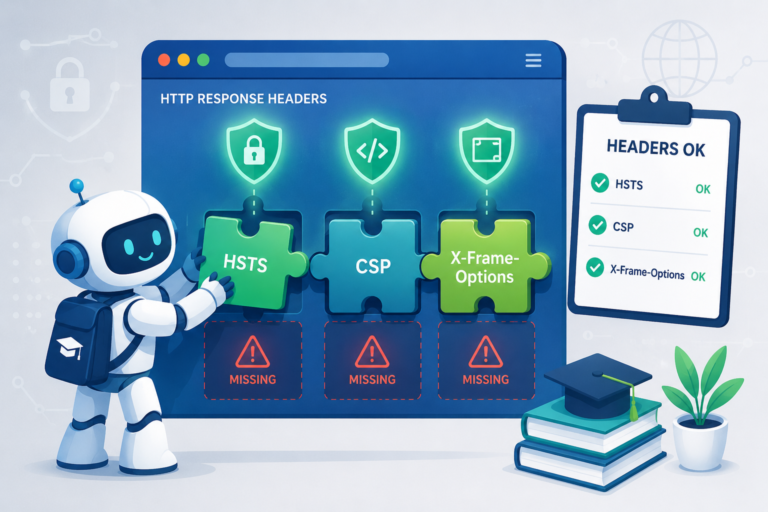
Missing security headers browser warnings clear as a robot fits HSTS, CSP, and X-Frame-Options pieces.

Missing security headers browser to use its default behavior, which is often less restrictive than a well-tuned policy.  It’s a silent permission slip for trouble. This isn’t about a server hack. It’s about giving away control on the client side.…

  • Leon I. Hicks
  • July 26, 2026
  • Common Security Misconfigurations

Why Directory Listing Vulnerability Prevention Matters

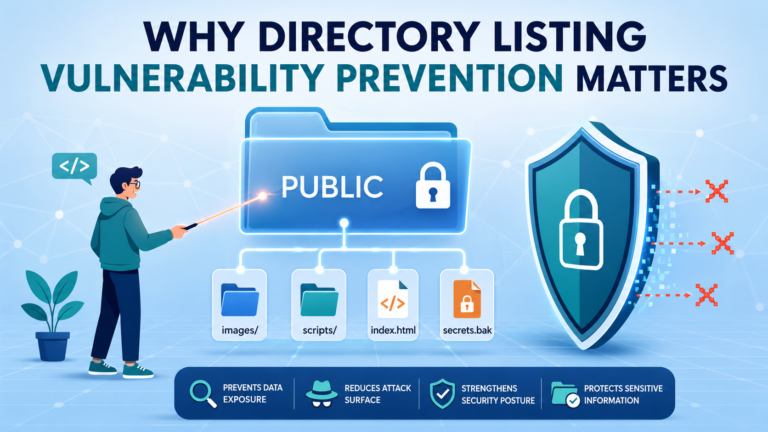
Directory listing vulnerability prevention locks a public folder, blocking exposure of secret backup files.

A directory listing vulnerability prevention starts with a misconfigured web server. If there’s no default index file, the server might just show a folder’s full contents. That means anyone can see your backup files, source code, or configuration secrets. We’ve…

  • Leon I. Hicks
  • July 25, 2026
Prev
1 … 9 10 11 12 13 14 15 … 60
Next
Secure Coding Practices

Join a thriving global community of developers dedicated to writing cleaner, safer, and more resilient code. Whether you're just starting out or leveling up your skills, this bootcamp gives you the practical knowledge and hands-on experience needed to identify vulnerabilities, apply secure coding principles, and build software that stands up to real-world threats.

Join the Next Bootcamp →

  • About us
  • Blog
  • Bootcamp
  • Disclaimer
  • Contact us
  • Privacy Policy
  • Terms & Conditions

Copyright © 2026 SecureCodingPractices.com — All rights reserved.